
If people aren't noticing you, clicking or enquiring, your marketing is broken. If they are, but they don't buy, buy once and disappear, or never recommend you, your growth system is broken.
Each problem needs a different fix, so it's worth knowing which one you have before you change anything. This blog gives you simple checks for both..
Why It Matters Which One Is Broken
When revenue is flat, most businesses reach for the same fix: new ads, a new agency or a bigger budget. That only helps if marketing is the problem.
If the problem is further down the line, more marketing just sends more people into the same gap. You pay more for every new customer, and revenue still doesn't move.
We've already explained what a growth system is in What Is A Full Stack Growth System?. This post is more practical: it helps you work out which part of your business is actually broken.
Signs Your Marketing Is Broken
Your marketing is broken when the right people aren't finding you. Your ads, social posts, SEO and content are either not reaching the people you want, or reaching the wrong ones.
More views or clicks isn't the goal. Lots of traffic from people who will never buy still means your marketing isn't working.
Signs to look out for:
- very few people clicking your ads or visiting your site
- visitors leaving your website within seconds
- plenty of views, clicks or enquiries, but mostly from people who will never buy
- your cost per lead keeps rising, even though you haven't changed anything
Three Quick Checks
- The five-second test. Show your homepage or your best ad to someone who doesn't know your business, for five seconds. Then ask them what you sell and who it's for. If they can't tell you, your message is the problem.
- Read your last 10 enquiries. Are these people you'd love to work with? If most of them aren't, your targeting or your offer is off.
- Find the first big drop. If few people click, the ad isn't working. If plenty of people click but few enquire, the page or the offer isn't working.
Signs Your Growth System Is Broken
Your growth system is broken when the right people find you, but revenue still doesn't grow. The strange part is that every team can usually show you a good report.
That's because each team measures its own stage, and nobody measures the handoffs between them. A handoff is the moment a customer moves from one stage to the next, and usually from one team to another. If nobody owns that moment, customers fall through it.
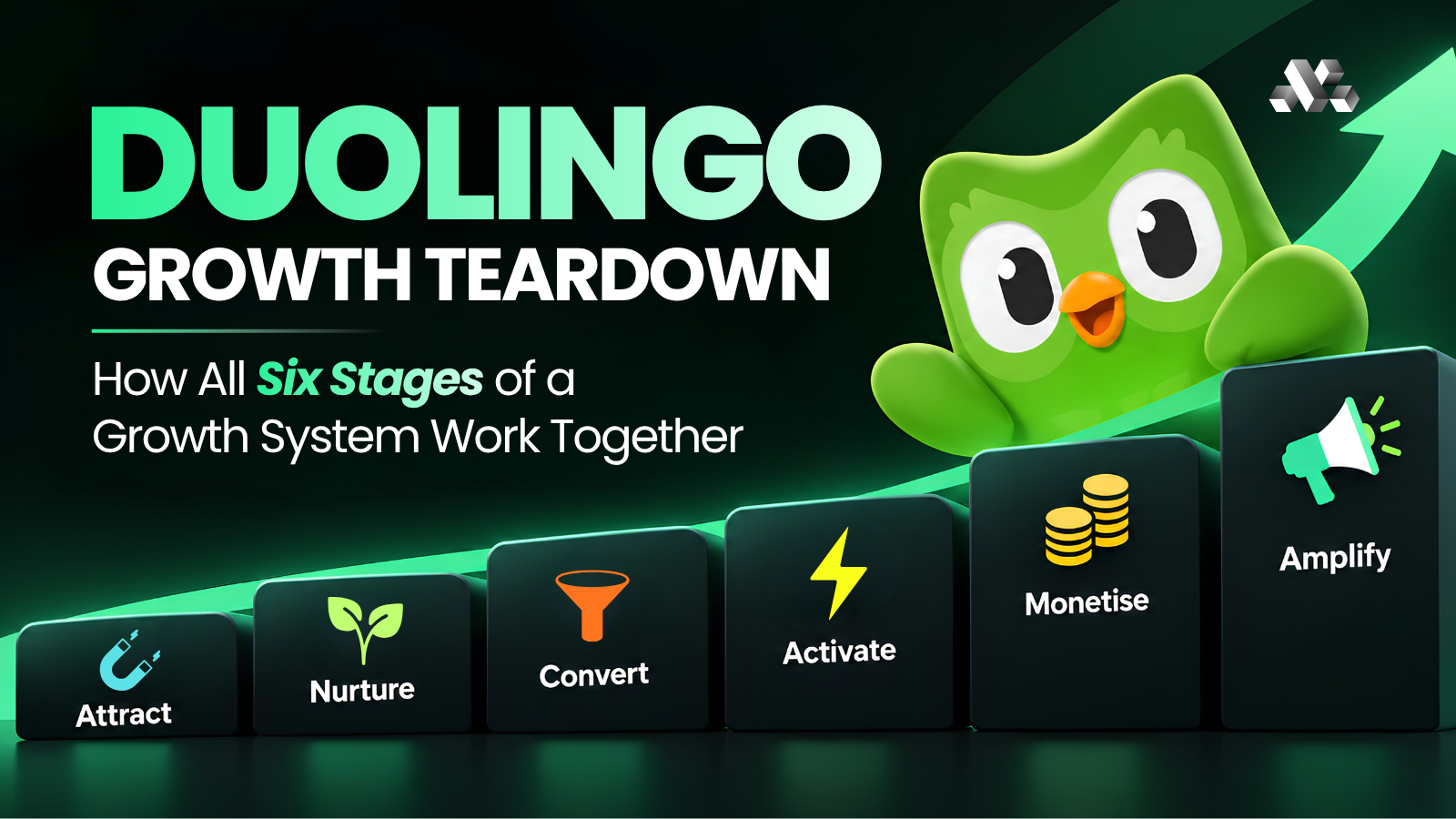
In the Full Stack Growth System, the customer journey runs through six stages: Attract, Nurture, Convert, Activate, Monetise and Amplify. These are the five handoffs where revenue most often slips away.
1. Attract to Nurture: The lead waits
What the reports say: marketing is bringing in leads at a good price.
What's really happening: new leads sit in a shared inbox overnight, sometimes for days, because nobody owns them between the form and the first reply. By the time someone responds, the lead may have already spoken to a competitor.
How to fix it: give every lead a named owner, put a booking link in the first email, and report reply time next to cost per lead. If you pay $40 for a lead and then make them wait 30 hours for a reply, that $40 is probably wasted. The slow reply cost you more than the ad did.
2. Nurture to Convert: The context gets lost
What the reports say: marketing hits its lead target, and sales says the leads are poor quality.
What's really happening: the lead gets forwarded to sales straight away, but often just as a name, email and phone number. What they wrote in the form sits in another tool, or nobody reads it before the call. So the salesperson starts by asking the same questions again, and the lead has to repeat themselves. Some of the leads sales calls "poor quality" were actually good leads who got a bad first call.
How to fix it: send the salesperson a three-line summary before every call: what the lead wants, what they've already seen from you, and what they asked.
3. Convert to Activate: The customer goes quiet
What the reports say: sales hit its target, and the account set-up is on schedule.
What's really happening: the customer has paid, then hears nothing for a week while things happen behind the scenes. This is when doubt starts, and it can make the second sale much harder. We explain why in Why The Second Sale Is Harder Than The First.
How to fix it: before you close the deal, agree what the customer will be able to point to after seven days. Then plan backwards from that result: a welcome message on day one and a kick-off call by day three.
4. Activate to Monetise: Existing customers aren't buying more
What the reports say: customers are happy, they're getting results, and activation rates look healthy.
What's really happening: customers have bought, completed onboarding and are actively using the product, but there's no system to generate more revenue from them. Nobody is offering relevant upgrades, additional services or new products at the right time. There are no automated follow-ups based on what customers have bought, used or achieved. So the business keeps spending money to acquire new customers while missing opportunities to increase the lifetime value of existing ones.
How to fix it: build automated offers into the customer journey. Use customer behaviour, purchase history and milestones to trigger relevant upsells, cross-sells or repeat purchase offers. For example, when a customer finishes their first programme or reaches a particular milestone, automatically introduce them to the next product or a premium offer. The goal is to maximise the lifetime value of every customer, not just make the first sale.
5. Monetise to Amplify: The win goes unused
What the reports say: customers are happy, repeat purchases are happening, and satisfaction scores are high.
What's really happening: nobody asks those happy, paying customers for a referral. Or they're asked on a date, such as after 90 days, when the excitement of their first result has already faded.
How to fix it: decide what the first win is for your product, and make it trigger the referral ask. Keep it specific: "Do you know one other founder with the problem you had?"
The Pattern Behind All Five
In every case, both teams can be doing their own job well. The revenue is lost in the gap between them. That's why fixing a growth system usually needs one person who owns the whole journey, not another specialist for one stage.
How To Check Which One You Have
Check 1: Become your own lead
Fill in your own website form using a personal email address. Note how long it takes a real person to reply, whether the next step is clear, and how the sales call opens if a colleague books you in. It takes ten minutes, and you'll see exactly what your buyers go through.
Check 2: Trace your last 20 leads
List your last 20 leads in a spreadsheet. For each one, note how far they got, then see where most of them stopped:
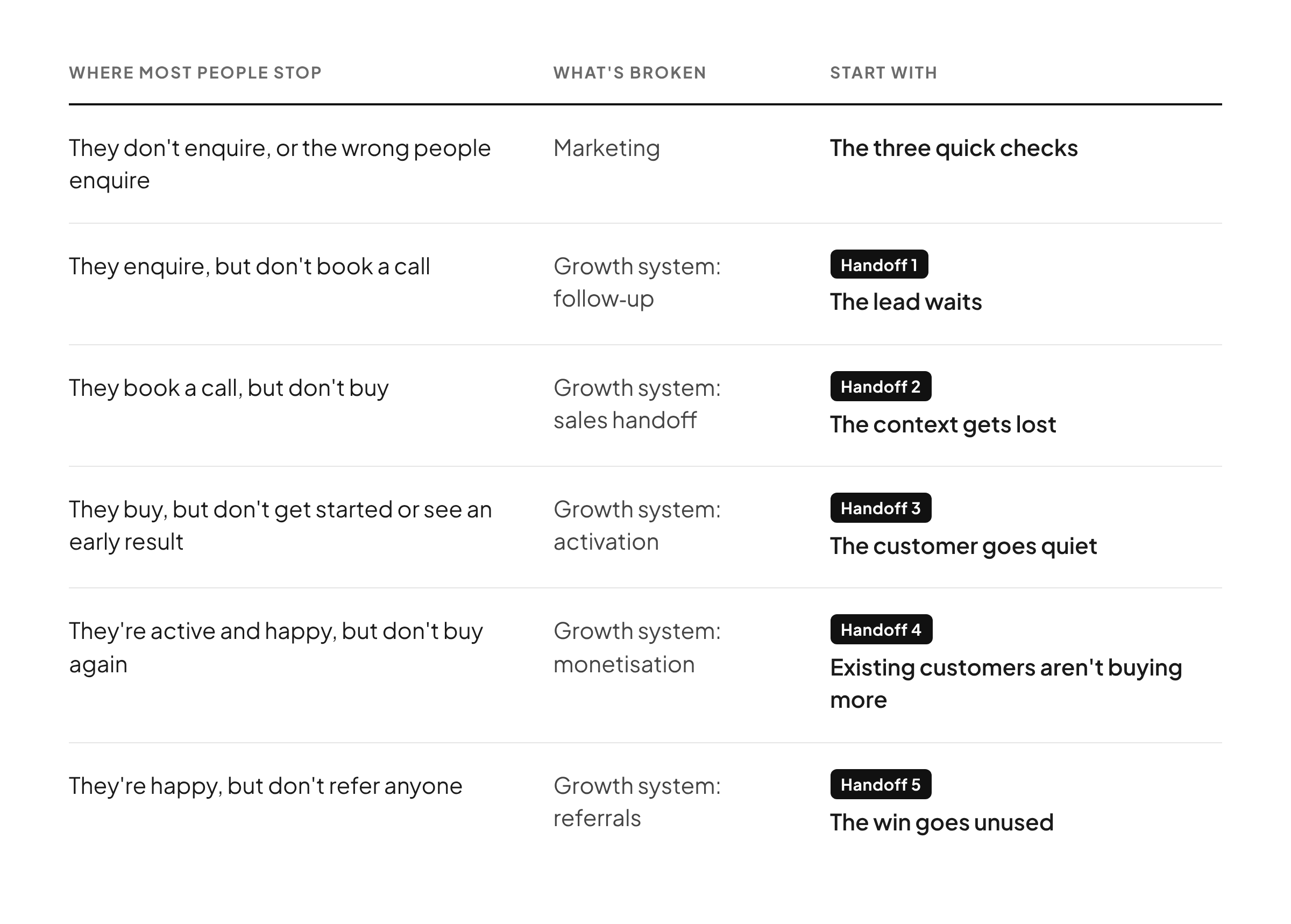
If you can't fill this in without opening four different tools, that's a problem too. One Source Of Truth: Why Your Growth Data Needs To Live In One Place explains how to fix it.
What To Do Next
If your marketing is broken: fix the message first, then the targeting, and only then the budget. A bigger budget won't help if people can't tell what you sell.
If your growth system is broken: fix the stage where most people stop, and give one person ownership of the whole customer journey, not just one part of it. We explain why in Why Hiring Seven Marketing Specialists Doesn't Compound. Spend more on ads only once the gap is closed.
When marketing and the rest of the Full Stack Growth System work together, ad spend turns into revenue. On our own Performance System, $3,584 in ad spend brought in $60,000 in revenue, about $16.74 back for every $1 spent.
FAQs
How do I know if my marketing is broken? If people don't notice you, don't click or don't enquire, or if most enquiries come from the wrong people, the problem is your marketing.
How do I know if my growth system is broken? If the right people enquire but few of them buy, or customers buy once and never come back, the problem is your growth system.
Can both be broken at the same time? Yes. Start with the stage that loses the most people, then move to the next one.
Not Sure Which One Is Broken?
We'll check your marketing and your growth system, stage by stage, and show you exactly where you're losing revenue. Book a free Growth Audit.