How AI Is Changing Business Growth
1. Good Decisions and Strategies Are Becoming Easier. Great Execution Is Becoming More Valuable
Tasks that once required hours of work can now take minutes.
AI can help you research an audience, write ad variations, analyse customer feedback and automate repetitive tasks. Small teams can do work that previously required more people and resources.
But when everyone has access to similar tools, producing more becomes less of a competitive advantage.
If your competitors can generate content just as quickly, speed alone won't make you stand out. The advantage comes from knowing what to create, who to target and what will make someone buy.
AI lowers the cost of execution. It doesn't remove the cost of making bad decisions.
2. More Marketing Doesn't Mean More Growth
AI makes it tempting to measure progress by output.
More posts published. More ads tested. More emails sent. More campaigns launched. But these are activities, not business results.
Imagine two businesses.
- Business A uses AI to publish 50 pieces of content every month. Business B publishes 10, but those pieces attract the right audience and generate qualified leads.
- Business A produces more. Business B may grow faster.
The difference isn't how much content they create. It's whether that content moves people towards becoming customers.
This is why businesses need to connect marketing activity to revenue, rather than assuming more output means better performance.
3. The Ability To Use AI Is Not the Same As Knowing Where To Use It
A business can have access to the best AI tools and still struggle to grow.
Why?
Because the tool doesn't tell you which problem matters most.
If you're attracting the wrong audience, automating your sales follow-ups won't fix it. If prospects are interested but don't buy, publishing more content may not help. If customers buy but leave quickly, generating more leads could simply mean replacing customers you're failing to retain.
Each problem requires a different response.
The important skill isn't just knowing how to use AI. It's understanding the business well enough to know where AI can make a difference.
What Hasn't Changed About Business Growth?
1. Customers Still Need A Reason To Buy
AI can help you write better ads and sales pages, but it can't make an unwanted product appealing just by improving the copy.
You still need to understand your customers, solve a problem they care about and give them a reason to choose your offer.
If people visit your website but don't enquire, you may need to improve your offer or messaging before spending more on traffic.
Better marketing cannot compensate for an offer people don't want.
2. Trust Still Matters
Customers need reasons to believe your business can deliver what it promises.
Reviews, case studies, recommendations and genuine results help build that trust.
AI can help you communicate your value, but it cannot replace real proof or a good reputation.
If people don't trust your business, publishing more content won't necessarily change their minds.
3. Sales Still Depend On The Whole Process
Generating leads is only the beginning. Those leads still need to understand your offer, have their concerns addressed and know what to do next.
Imagine your business receives 100 enquiries but converts only two into customers.
Generating another 100 enquiries won't fix the reason the original prospects didn't buy.
The problem could be poor lead quality, an unclear offer or a weak sales process.
AI can help analyse sales conversations and improve follow-ups, but you still need to address the reasons people aren't buying.
4. Customer Experience Still Matters After The Sale
Getting a customer to buy doesn't guarantee they'll stay.
If customers struggle to get started, fail to see results or receive poor service, they may not buy again or recommend your business.
AI can help automate onboarding and identify customers who need support. But your product or service still needs to deliver value.
Before spending more to attract new customers, make sure existing customers are getting what they paid for.
How To Apply This To Your Business
Instead of asking, "How can I use more AI?", ask: Where is my business losing customers or revenue, and how can I fix it?
The Full Stack Growth System helps you examine the entire customer journey through six stages:
Attract → Nurture → Convert → Activate → Monetise → Amplify

Each stage helps you identify a different problem.
For example, if you're attracting plenty of visitors but few qualified leads, look at your targeting. If prospects enquire but don't buy, examine your offer and sales process. If customers leave quickly, investigate their experience after the sale.
Once you know where the problem lies, you can decide whether AI can help.
How to Build an Effective AI Business Strategy
Before adopting another AI tool, ask yourself three questions.
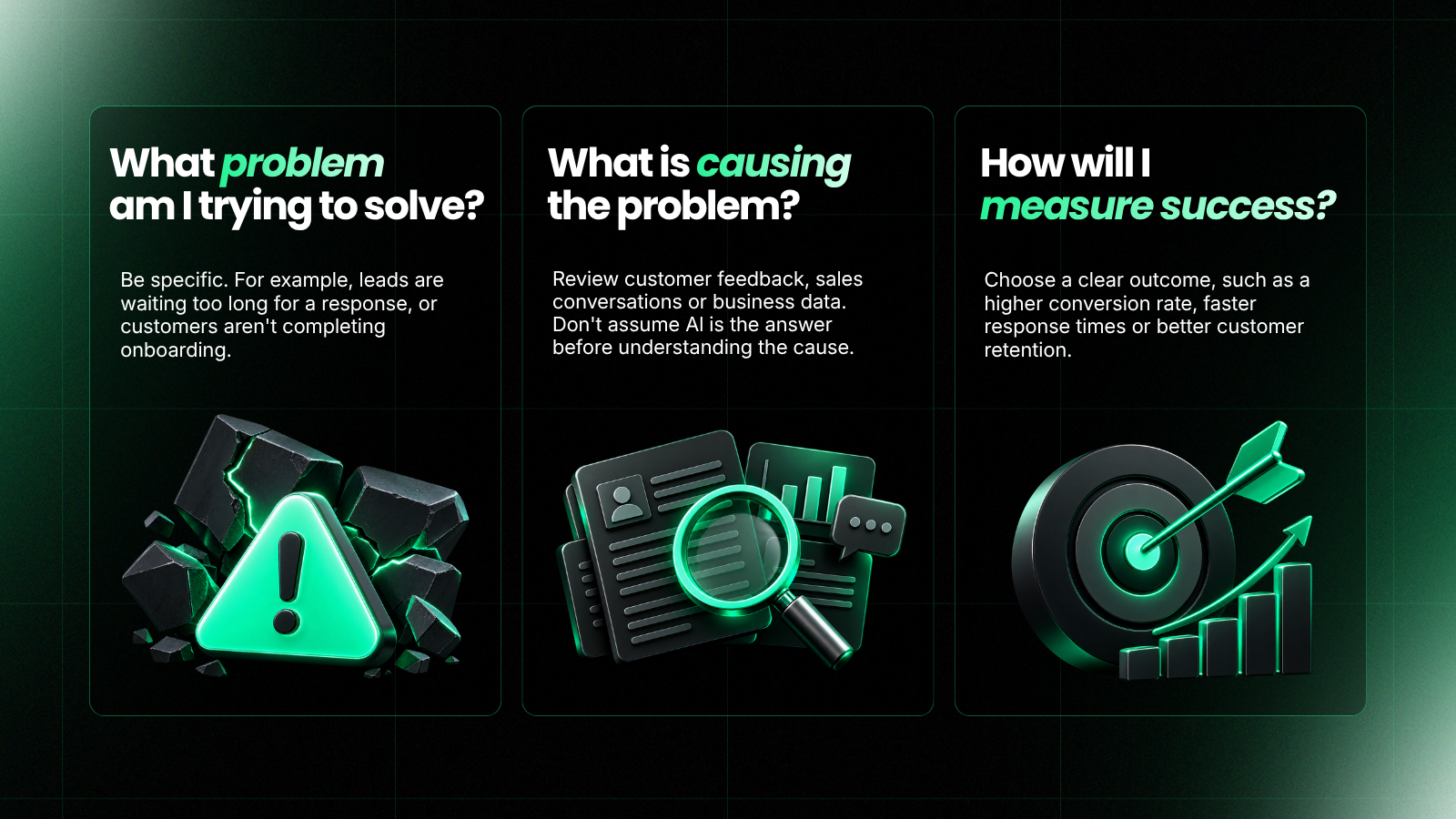
Measure the results after making a change. If performance doesn't improve, review your approach before adding more tools.
This keeps AI focused on improving business results rather than simply increasing the amount of work you do.
AI For Business Growth: Key Takeaways
AI makes it faster and cheaper to execute many business tasks. But doing more work doesn't automatically generate more revenue.
You still need to understand your customers, create an offer people want, convert interest into sales and deliver value after the purchase.
That's why the Full Stack Growth System matters. It helps you see how the different parts of your business connect, identify where growth is being lost and focus on fixing the right problems.
Don't start by asking what AI can do. Start by identifying what your business needs to improve. Then use AI to help you get there.
Explore the Full Stack Growth System to see how the six stages work together, or start with a Growth Audit to identify where your business needs improvement.