Search is changing.
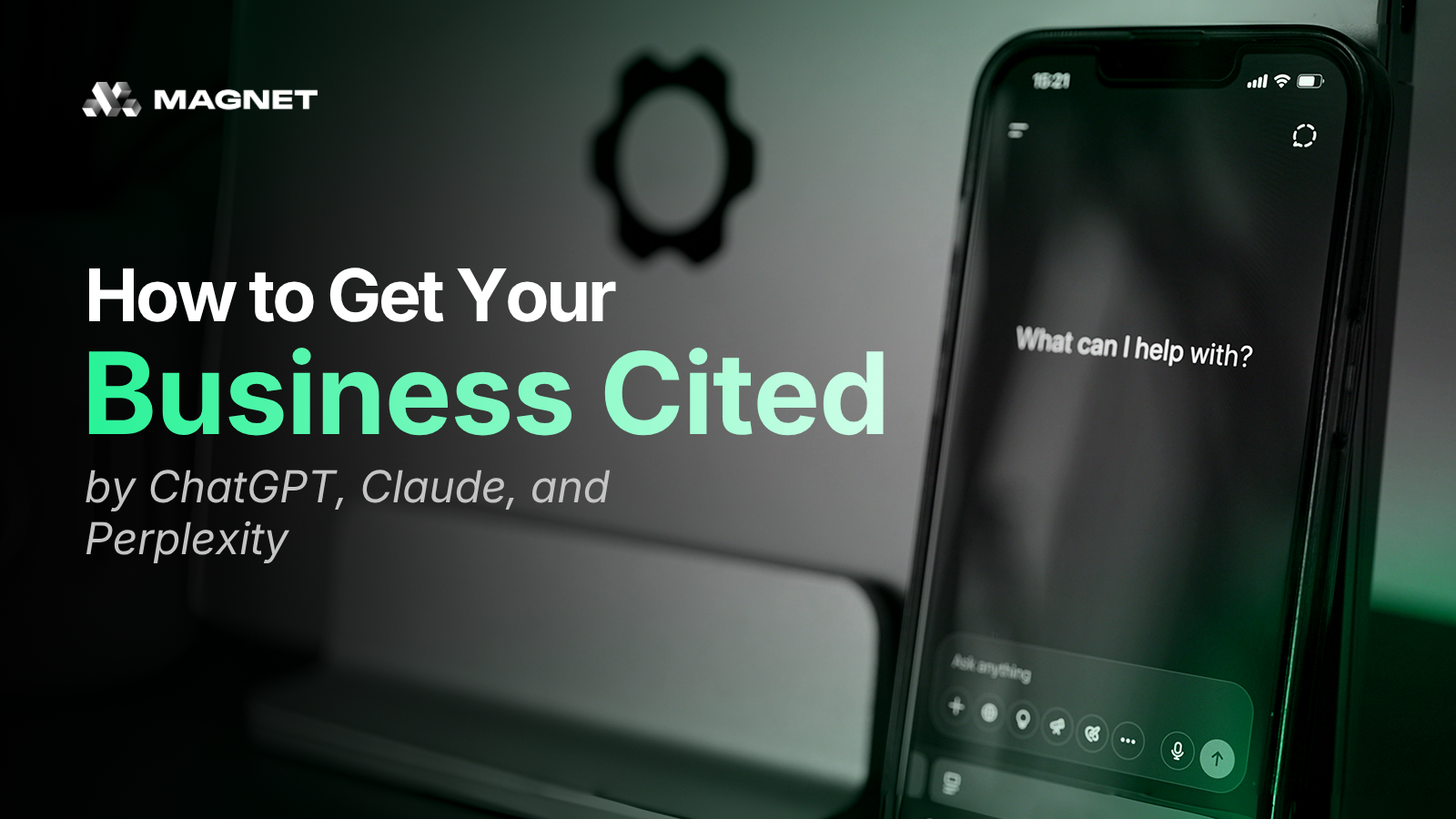
People aren't only searching Google anymore. They're asking ChatGPT, Gemini, Perplexity, and other AI tools to find answers, compare options, and recommend what they should buy.
That creates a new problem for marketers.
Your business can rank #1 on Google and still be invisible when your ICP asks AI which solution to choose.
That's the difference marketers need to understand between SEO and AEO. SEO helps your business show up in traditional search results. AEO helps your business show up when an AI tool is generating the answer.
And this matters because Attract isn't about getting traffic for the sake of traffic. It's about getting qualified attention from the right people.
If the way people discover businesses is changing, the way you attract them has to change too.
What Is AEO?
AEO stands for Answer Engine Optimisation.
Traditional SEO is mainly built around getting a webpage to rank for a search query. Someone searches Google, sees a list of results, and clicks through to the websites that look useful.
AI search can work differently. Someone can ask a full question and get a direct answer, sometimes with sources or recommendations included. Your business might be mentioned in that answer. It might be cited as a source. It might be included when the AI compares different options. Or it might not appear at all.
That's the shift marketers need to pay attention to.
You're no longer only trying to get someone to click your website. You're also trying to make sure your business is understood well enough to be included in the answers your ICP is already looking for.
SEO Still Matters. But Search Is No Longer One Place.
This doesn't mean SEO is dead.
Google still drives a huge amount of search behaviour, and people still use traditional search to research products, services, and problems.
The mistake is treating AEO as a replacement for SEO. Think of it as expanding the places where your business needs to be discoverable.
Your ICP might search Google in the morning, ask ChatGPT a question later, and then use Perplexity to compare their options. The platforms may be different, but they're all part of the same journey: looking for an answer.
Your job is to be useful wherever that search happens.
What Marketers Need To Do Differently
The shift to AI search doesn't mean throwing away everything you already know about marketing. It means changing what you optimise for.
1. Start with the questions your ICP is already asking.
Don't start by asking, “What keywords should we target?” Start by asking, “What questions is our ICP asking?” What are they trying to solve? What are they confused about? What are they comparing? What would they ask an AI tool before they ever speak to a salesperson?
For a B2B company selling customer support software, those questions might be: “What is the best customer support software for a 50-person SaaS company?” “How much does customer support software cost?” “How can I reduce customer support response times?” “What should I look for when choosing customer support software?”
Those questions tell you much more about your ICP than a list of keywords on its own.
2. Build around the problem, not one keyword.
One keyword rarely represents the whole conversation.
Someone searching for “customer support software” might also want to know how much it costs, which features matter, what alternatives exist, how it compares with another platform, or whether it's suitable for their type of business.
Those are all different questions around the same problem.
Instead of creating one article for one keyword and moving on, build useful content around the wider topic. Answer the obvious questions, cover the comparisons, explain common mistakes, and show how things work.
Don't write an article just because a keyword has search volume. Give people a useful answer first, then give them the context they need.
3. Make your business easy to understand.
AEO isn't just about creating more content. AI needs to understand what your business actually does, who it's for, and why it might be relevant to the question being asked.
If your website says you're “an innovative solution for modern businesses,” that's not very helpful. Be specific about who you help, what problem you solve, what you offer, and what makes your approach different. The same applies to the wider web.
Your website isn't the only place people can learn about your business. Information about your company can also appear in reviews, industry publications, directories, podcasts, interviews, social profiles, and other websites.
If your website says you specialise in SaaS growth but other places describe you as a general marketing company, you're giving people a mixed picture.
Keep the important parts consistent: what you do, who you help, what problem you solve, and what you're known for. The clearer your presence is across the web, the easier it is for people and AI systems to understand your business.
A Practical AEO Checklist
You don't need to rebuild your entire marketing strategy overnight. Start with the basics and make sure the foundations are in place.
☐ Know your ICP - Be clear about who you're trying to attract and what they care about.
☐ List the questions they ask - Think about what they'd search on Google or ask ChatGPT before buying.
☐ Answer directly - Create useful pages and content that answer those questions clearly.
☐ Make your business easy to understand - Be specific about who you help, what you do, the problem you solve, and what makes you different.
☐ Cover the wider topic - Go beyond one keyword and answer related questions, comparisons, and objections.
☐ Add real evidence - Use original data, examples, case studies, customer results, and genuine experience where possible.
☐ Check your wider presence - Look at your website, social profiles, directories, reviews, publications, and other relevant sites.
☐ Test what AI says about you - Ask different AI tools realistic questions your ICP might ask and see whether your business appears and how it's described.
☐ Keep improving - If you're not appearing, look at the question, your answer, your positioning, and the information available about your business before simply publishing more content.
You don't need to tick every box before you start. Pick the questions that matter most to your ICP and build from there.
Attract Is Bigger Than Traffic
Attract has never been about getting the biggest number of visitors possible. It's about putting the right offer in front of the right people at a cost that makes sense.
AEO doesn't change that. It changes one of the places where that attention can happen. You might get that attention from an ad, a LinkedIn post, a Google search, or an answer generated by an AI tool.
The channel can change. The goal doesn't. Drive qualified attention.
And in 2026, that means thinking beyond where you rank and starting to think about where your business gets mentioned, recommended, and discovered.
SEO helps you get found in search. AEO helps you get included in the answer. You need to think about both.


.png)